* Rotation:
* Ancient Greeks: Philosophers like Pythagoras and Aristarchus proposed the Earth rotated, but they lacked concrete evidence.
* Foucault's Pendulum (1851): Léon Foucault's pendulum experiment provided the first definitive proof of Earth's rotation. The pendulum's swing plane slowly changed over time, demonstrating that the Earth was rotating beneath it.
* Revolution:
* Ancient Greeks: Aristarchus of Samos around 250 BC proposed a heliocentric model where the Earth revolved around the Sun, but his theory was not widely accepted.
* Nicolaus Copernicus (1543): Copernicus revived the heliocentric model and presented evidence from his observations. He published "De Revolutionibus Orbium Coelestium" which challenged the geocentric (Earth-centered) model.
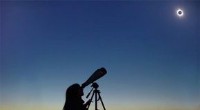
* Galileo Galilei (early 1600s): Galileo's observations using telescopes provided strong evidence for the heliocentric model. He observed phases of Venus, which could only be explained if Venus orbited the Sun. He also observed the moons of Jupiter, demonstrating that not everything revolved around the Earth.
* Johannes Kepler (early 1600s): Kepler formulated the three laws of planetary motion, which accurately described the elliptical orbits of planets around the Sun.
It's important to note: The acceptance of the heliocentric model wasn't instant. It faced resistance from the Church and the prevailing geocentric worldview. It took time for the scientific community to embrace the correct understanding of our solar system.