General Facts:
* Not all planets are spherical: While the giant planets are mostly spherical, smaller planets and dwarf planets can have irregular shapes due to weaker gravity.
* Planets don't have their own light: They reflect light from their star.
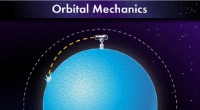
* Planets orbit stars: They are held in place by the star's gravitational pull.
* There are eight planets in our solar system: Mercury, Venus, Earth, Mars, Jupiter, Saturn, Uranus, and Neptune.
* The largest planet in our solar system is Jupiter: It's so large that all the other planets could fit inside it.
Specific Planet Facts:
* Venus is the hottest planet in our solar system: It has a dense atmosphere that traps heat.
* Mars has two moons: Phobos and Deimos, named after the Greek gods of fear and panic.
* Jupiter has a Great Red Spot: It's a giant storm that has been raging for centuries.
* Saturn's rings are made of ice and rock: They are so vast that you could fit Earth inside them.
* Uranus is tilted on its side: It rotates on its axis almost horizontally.
* Neptune is the windiest planet in our solar system: Winds can reach speeds of over 1,200 mph.
Beyond Our Solar System:
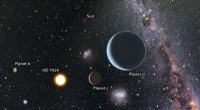
* There are billions of planets in the Milky Way galaxy alone: Many of these planets may be similar to Earth.
* Exoplanets come in all shapes and sizes: Some are gas giants, some are rocky, and some are even covered in diamonds.
* We are still discovering new planets all the time: Scientists are constantly searching for new planets using telescopes and other instruments.
Fun Facts:
* Pluto was reclassified as a dwarf planet in 2006: This was a controversial decision, but it led to a better understanding of what defines a planet.
* The Earth is not perfectly round: It's slightly flattened at the poles and bulging at the equator.
* The sun is not actually yellow: It appears yellow from Earth, but it's actually white.
These are just a few facts about planets. There is much more to learn about these fascinating celestial bodies!