Here's the breakdown:
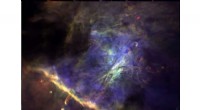
* The Crab Nebula: This is a supernova remnant, a cloud of gas and dust expanding from the explosion of a star. It is located about 6,500 light-years away in the constellation Taurus.
* Supernova 1054: The Crab Nebula was formed by the supernova explosion that was observed by astronomers in 1054 AD.
* The Pulsar: At the very heart of the Crab Nebula lies a pulsar, a rapidly rotating neutron star. This neutron star, only about 20 miles across, is incredibly dense, containing the mass of our sun. It spins at an astounding rate of 30 times per second.
* Powering the Nebula: The pulsar's intense magnetic field and rapid rotation create powerful beams of radiation that are emitted from its poles. These beams sweep across space like a lighthouse, and when they intersect with the Crab Nebula's gas, they cause it to glow with intense energy.
Therefore, the Crab Nebula is a prime example of how a pulsar can power the surrounding nebula. This energy is responsible for the nebula's distinctive features, including its bright, expanding filaments and intense radiation. Studying the Crab Nebula allows scientists to gain valuable insights into the properties of pulsars and the aftermath of supernova explosions.