Here's a breakdown:
* The Big Bang theory proposes that the universe began in an extremely hot, dense state around 13.8 billion years ago.
* This state rapidly expanded and cooled, leading to the formation of the fundamental particles, atoms, and eventually stars, galaxies, and planets we observe today.
* Evidence supporting the Big Bang includes:
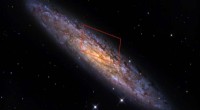
* Redshift of distant galaxies: Light from distant galaxies is shifted towards the red end of the spectrum, indicating that they are moving away from us.
* Cosmic microwave background radiation: This faint, uniform background radiation is a remnant of the Big Bang.
* Abundance of light elements: The observed abundance of light elements like hydrogen and helium aligns with the Big Bang model.
* Expansion of the universe: Observations show that the universe is expanding, as predicted by the Big Bang.
It's important to note: The Big Bang theory doesn't explain what existed before the Big Bang, or what caused it. It describes the universe's evolution from a very early, extremely hot and dense state.
The Big Bang theory is a powerful and well-supported framework for understanding the universe's origin and evolution. However, it's a constantly evolving theory, with ongoing research refining our understanding.