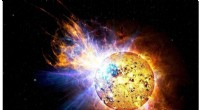
* Solar flares or coronal mass ejections (CMEs) occur on the Sun. These events release massive amounts of energy and charged particles into space.
* These particles reach Earth's magnetic field and are guided towards the poles. Earth's magnetic field acts like a shield, protecting us from the harmful radiation from the sun. However, some of these particles get trapped in the magnetic field and funnelled towards the poles.
* The charged particles collide with atoms and molecules in the upper atmosphere. This collision causes the atoms to become excited, and when they return to their ground state, they release energy in the form of light, creating the auroras.
When can you see the Auroras?
Auroras are most commonly seen near the Earth's magnetic poles, in regions known as the auroral ovals. These ovals are located around 60-70 degrees latitude, encompassing areas like:
* Northern Hemisphere: Northern Lights (Aurora Borealis) - Alaska, Canada, Greenland, Iceland, Norway, Sweden, Finland, Russia
* Southern Hemisphere: Southern Lights (Aurora Australis) - Antarctica, New Zealand, Tasmania, southern parts of South America and Australia
The best time to see Auroras is:
* During periods of increased solar activity. This typically occurs during the solar maximum, which happens every 11 years.
* During the winter months, when the nights are longer and darker.
* Clear, dark skies are essential for optimal viewing.
It's important to note that Auroras are a natural phenomenon and their occurrence is unpredictable. However, with the right conditions and some luck, you might get a chance to witness this stunning display of nature's lightshow!