Here's what we know:
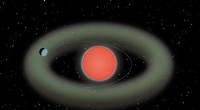
* Thousands discovered: Astronomers have confirmed the existence of over 5,000 exoplanets, and there are likely many more waiting to be found.
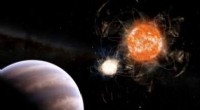
* Variety is vast: These exoplanets come in all shapes and sizes. Some are similar to Earth, while others are gas giants much larger than Jupiter. There are planets orbiting pulsars (dead stars) and even planets that orbit two stars at once!
* Methods of discovery: We primarily detect exoplanets by observing how their gravity affects the stars they orbit:
* Transit method: We look for dips in a star's brightness as an exoplanet passes in front of it.
* Radial velocity method: We observe slight wobbles in a star's movement, caused by the gravitational pull of an orbiting planet.
* Ongoing search: Powerful telescopes like Kepler, TESS, and the James Webb Space Telescope are dedicated to finding more exoplanets, studying their atmospheres, and searching for signs of life.
The discovery of exoplanets is a truly exciting field of astronomy, and it's helping us understand the diversity of planets and the possibility of life beyond Earth.