Inner Planets:
* Mercury: The MESSENGER spacecraft orbited Mercury from 2011 to 2015, providing the first detailed global maps of the planet.
* Venus: Numerous probes have visited Venus, including Mariner 2 (the first successful flyby of another planet), Magellan (which mapped the surface using radar), and the Pioneer Venus program (which included both an orbiter and atmospheric probes).
* Mars: The US has a long history of exploring Mars, with successful missions including the Viking landers, the Mars rovers (Sojourner, Spirit, Opportunity, Curiosity, and Perseverance), and the Mars Reconnaissance Orbiter.
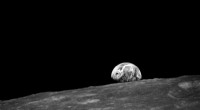
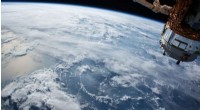
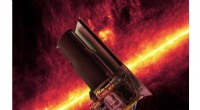
* Earth: While not a planet in the traditional sense, the US has sent numerous missions into Earth orbit, including the Hubble Space Telescope, the International Space Station, and numerous Earth-observing satellites.
Outer Planets:
* Jupiter: Pioneer 10 and 11, Voyager 1 and 2, Galileo, and Juno have all visited Jupiter, providing detailed information about its atmosphere, moons, and magnetic field.
* Saturn: Voyager 1 and 2, Cassini (which orbited Saturn for 13 years), and Pioneer 11 have explored Saturn, revealing its rings, moons, and atmosphere.
* Uranus: Voyager 2 is the only spacecraft to have flown by Uranus, capturing images of its rings and moons.
* Neptune: Like Uranus, Voyager 2 is the only spacecraft to have flown by Neptune, providing the first close-up views of this distant planet.
Beyond Planets:
* Pluto: The New Horizons mission successfully flew by Pluto in 2015, providing stunning images of the dwarf planet and its moons.
Important Note: While the US space program has sent probes to all the planets in our solar system, they haven't landed on all of them. For example, no US probe has landed on Venus due to its extreme surface conditions.