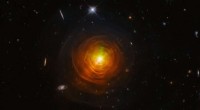
Both theories propose that the solar system formed from a rotating cloud of gas and dust.
* Nebular Hypothesis: This theory, proposed by Immanuel Kant and Pierre-Simon Laplace in the 18th century, states that the solar system originated from a vast, slowly rotating cloud of gas and dust called a nebula. This cloud, primarily composed of hydrogen and helium, contracted under gravity, leading to a spinning disc with a central concentration of material. The central concentration eventually ignited as a star (our Sun), while the surrounding material coalesced into planets, moons, and other objects.
* Protoplanet Hypothesis: This theory builds on the Nebular Hypothesis by focusing on the specific formation of planets. It suggests that within the protoplanetary disc, dust grains clumped together, forming planetesimals. These planetesimals then collided and grew, eventually becoming protoplanets. Further collisions and accretion led to the formation of the planets we observe today.
Key Similarity: Both hypotheses share the fundamental concept of a collapsing nebula as the starting point for solar system formation. The difference lies in the emphasis: the Nebular Hypothesis focuses on the overall process, while the Protoplanet Hypothesis specifically addresses the formation of planets.
In essence, the Protoplanet Hypothesis is a more detailed explanation of the planetary formation process within the framework provided by the Nebular Hypothesis.