* Galaxy: A massive, gravitationally bound system of stars, gas, dust, and dark matter. Think of it like a giant city of stars. Our Milky Way is a galaxy.
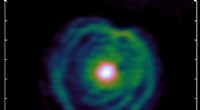
* Nebula: A cloud of gas and dust in space. They can be diffuse and spread out, or dense and compact. Nebulae are often where stars are born.
Here's the breakdown:
* Size: Galaxies are significantly larger than nebulae. Nebulae are often found *within* galaxies, and can range in size from a few light-years to hundreds of light-years across. Galaxies, on the other hand, can be tens of thousands to hundreds of thousands of light-years in diameter.
* Composition: Galaxies have a mix of stars, gas, dust, and dark matter. Nebulae are primarily composed of gas and dust.
* Role: Nebulae are the "birthplaces" of stars, while galaxies are the massive structures that contain countless stars, nebulae, and other objects.
So, while a single nebula could be smaller than a particular part of a galaxy, overall a galaxy is a far larger structure.