1. Holding the Sun Together:
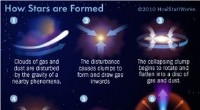
* Nuclear Fusion: The Sun's immense gravity compresses its core, creating incredibly high pressure and temperature. This is the perfect environment for nuclear fusion to occur, where hydrogen atoms fuse together to form helium, releasing immense energy that powers the Sun.
* Hydrostatic Equilibrium: The Sun's outward pressure from nuclear fusion is perfectly balanced by the inward pull of its own gravity. This state of equilibrium keeps the Sun stable and prevents it from collapsing or exploding.
2. Sun's Structure and Evolution:
* Core: The Sun's core is where the most intense gravity and nuclear fusion take place. The core's intense gravity is what fuels the nuclear reactions that sustain the Sun.
* Radiation Zone: The energy from the core travels outwards through the radiation zone. Gravity plays a role in this process, as the energy is carried by photons that are repeatedly absorbed and re-emitted by the Sun's dense plasma.
* Convection Zone: The outer layer of the Sun's interior is where hot gas rises and cooler gas sinks, creating a convection current. Gravity contributes to this process by pulling the cooler gas down, creating a cycle of energy transfer.
* The Sun's Life Cycle: The Sun's gravity will eventually play a role in its death. As the Sun runs out of hydrogen fuel, it will begin to expand and cool, becoming a red giant. Eventually, its core will collapse under its own gravity, leading to a white dwarf, a dense, hot remnant.
3. Solar System's Stability:
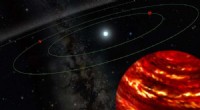
* Orbital Motion: The Sun's gravity holds all the planets in our solar system in orbit around it. Without the Sun's gravity, the planets would fly off into space.
In summary, gravity is the force that defines the Sun's existence and its role in the solar system:
* It holds the Sun together, allowing nuclear fusion to power it.
* It shapes the Sun's structure and evolution.
* It keeps the planets orbiting around the Sun.
Without gravity, the Sun would not exist as we know it, and our solar system would be very different.