1. Spacecraft Exploration:
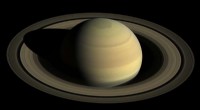
* Flybys: Pioneer 11, Voyager 1 and 2, and Cassini missions flew past Saturn, capturing images and gathering data on its atmosphere, rings, and moons.
* Orbiters: The Cassini mission spent 13 years orbiting Saturn, providing an unprecedented amount of data on its atmosphere, rings, magnetosphere, and moons. It even deployed a probe called Huygens that landed on Titan.
2. Earth-Based Telescopes:
* Optical Telescopes: These telescopes use visible light to study Saturn's atmosphere, rings, and moons. They can observe changes in cloud patterns, storms, and the seasonal variations on the planet.
* Radio Telescopes: These telescopes detect radio waves emitted by Saturn, revealing information about its magnetic field, auroras, and the composition of its atmosphere.
3. Spectroscopy:
* Spectrometers analyze the light reflected from Saturn, allowing scientists to determine the composition of its atmosphere, rings, and moons. By studying the absorption and emission of light at different wavelengths, they can identify elements and molecules present.
4. Gravity Measurements:
* Tracking spacecraft orbits around Saturn allows scientists to precisely measure its gravitational field. This provides information about the planet's internal structure, including its core and the distribution of its mass.
5. Modeling and Simulations:
* Scientists use computer models to simulate the atmospheric dynamics, ring structures, and internal processes of Saturn. These models help to test hypotheses and predict future events.
6. Studying its Moons:
* By studying Saturn's moons, particularly Titan and Enceladus, scientists gain insight into the planet's formation and the potential for life beyond Earth.
7. Citizen Science:
* Projects like the "Eyes on Saturn" program allow citizen scientists to help analyze images from the Cassini mission, contributing to our understanding of Saturn's rings and moons.
In summary, scientists use a multi-faceted approach to study Saturn, combining spacecraft missions, Earth-based telescopes, spectroscopy, modeling, and citizen science to unravel the mysteries of this fascinating planet.