* Light travels at a finite speed: Light, the information we use to study the universe, takes time to travel from its source to us. This means that when we look at a distant star or galaxy, we are not seeing it as it is now, but rather as it was in the past, the time it took for the light to reach us.
* Vast distances in space: The distances between celestial objects are immense, spanning light-years (the distance light travels in a year). This means that the light from even nearby stars has taken years to reach us, giving us a glimpse into their past states.
* Understanding the universe's history: By studying the light from distant objects, astronomers can piece together the history of the universe, from its early formation to its evolution over billions of years.
Example:
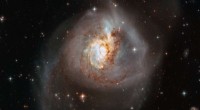
Imagine looking at a photograph of your childhood. You see yourself as you were years ago, not as you are now. Similarly, when astronomers look at a distant galaxy millions of light-years away, they are seeing that galaxy as it existed millions of years ago.
In essence, astronomy is like a time machine, allowing us to study the universe as it was in the past. This is a key aspect of what makes astronomy such a fascinating and awe-inspiring field.