1. Gravitational Measurements:
* Lunar Orbiter Missions: Spacecraft like the Lunar Reconnaissance Orbiter (LRO) map the moon's gravitational field precisely. Variations in the gravitational field reveal mass concentrations and voids within the moon, providing information about the density and distribution of materials in the interior.
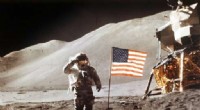
* Laser Ranging: Reflecting lasers off retroreflectors placed on the moon's surface by Apollo astronauts measures the distance to the moon with incredible accuracy. These measurements help determine the moon's rotation and wobble, revealing information about the distribution of mass within its interior.
2. Seismic Analysis:
* Seismometers: Apollo missions placed seismometers on the moon's surface. These instruments detected moonquakes, which provided clues about the moon's internal structure and composition. The analysis of seismic waves' speed and path helps scientists infer the properties of different layers within the moon.
* Meteorite Impacts: The impacts of meteoroids on the moon generate seismic waves that can be detected by instruments. Studying these waves provides insights into the structure and composition of the moon's crust and mantle.
3. Magnetic Field Analysis:
* Magnetometers: Spacecraft like the LRO measure the moon's weak magnetic field. This information reveals that the moon has a small, localized magnetic field, which suggests a core that may be partially molten.
4. Thermal Studies:
* Infrared Sensors: Spacecraft like the LRO measure the moon's surface temperature, which varies depending on the composition of the rocks and the depth of the lunar regolith. Analyzing these variations can reveal clues about the heat flow from the moon's interior.
5. Sample Analysis:
* Lunar Rocks: Samples of lunar rocks brought back by Apollo missions provide direct evidence of the moon's interior. Studying the composition and isotopic ratios of these samples reveals information about the moon's formation and evolution.
6. Computer Modeling:
* Numerical Simulations: Scientists use computer models based on data from the methods described above to simulate the moon's interior structure and evolution. These models help test hypotheses and make predictions about the moon's composition and dynamics.
While we have learned a lot about the moon's interior, there are still many unanswered questions. Continued exploration and research using these techniques, as well as future missions, will provide more insights into this fascinating celestial body.