1. The Nebula:
- The nebula was primarily composed of hydrogen and helium, with traces of heavier elements.
- It was slowly rotating and had a very low density.
2. Collapse:
- A disturbance, like a nearby supernova explosion, triggered the collapse of the nebula.
- As the nebula contracted, it began to spin faster due to conservation of angular momentum.
3. Formation of the Sun:
- The core of the collapsing nebula became extremely hot and dense.
- Nuclear fusion ignited in the core, forming the Sun.
4. Formation of Planets:
- Dust and gas in the rotating disk around the Sun began to clump together due to gravity.
- These clumps gradually grew into planetesimals, which then collided and merged to form planets.
5. Differentiation:
- Planets with enough gravity differentiated, meaning their interiors separated into layers based on density.
6. The Solar System:
- The remaining dust and gas either formed smaller bodies like asteroids and comets or was blown away by the solar wind.
- Over time, the solar system evolved into its current configuration.
Key Points of the Nebular Hypothesis:
- It explains the orderly arrangement of planets in our solar system.
- It explains the composition of planets, with rocky inner planets and gaseous outer planets.
- It explains the existence of asteroid belts and cometary clouds.
Evidence supporting the nebular hypothesis:
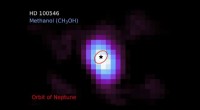
- The presence of similar rotating disks around young stars.
- The composition of planets and other solar system objects.
- The existence of meteorites, which are remnants of early solar system material.
The nebular hypothesis is the most widely accepted theory for the formation of our solar system. It has been refined and updated over time as new observations and data become available.