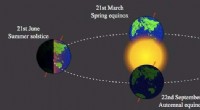
* Stars appear fixed: The stars seemed to maintain their relative positions to each other, forming constellations, even though the Earth moved around the Sun. This was interpreted as evidence that the Earth was stationary.
* Lack of parallax: Parallax is the apparent shift in the position of an object when viewed from different locations. Early astronomers did not observe any parallax in the stars, which would have been expected if the Earth were moving around the Sun. (They didn't have the tools to detect this subtle shift; it was only observed much later with telescopes.)
* Planetary retrograde motion: Planets, like Mars, seemed to move backwards in their orbits for periods of time. This was explained by the geocentric model with complex epicycles, where planets moved in smaller circles around a point that itself moved in a larger circle around the Earth.
However, these observations could also be explained by alternative models, and the geocentric model was ultimately proven incorrect.
It's important to remember that early astronomers were limited by their tools and understanding of the universe. The geocentric model was the best explanation available at the time, but it was later challenged and replaced by the heliocentric model, which is what we accept today.