Here's a breakdown:
Planets:
* Dominate their orbital neighborhood: This means they have "cleared their neighborhood" of other objects of similar size. In other words, they are the biggest gravitational force in their orbital path.
* Orbit the Sun directly: They are not moons of other planets.
* Are round: They have enough gravity to pull themselves into a roughly spherical shape.
Dwarf Planets:
* Do not dominate their orbital neighborhood: They share their orbital space with other objects of comparable size.
* Orbit the Sun directly: They are not moons of other planets.
* Are round: They have enough gravity to pull themselves into a roughly spherical shape.
Here's a simple analogy:
Imagine a playground with kids playing. A planet would be like the biggest kid on the playground, who has chased all the other kids away from their favorite spot. A dwarf planet would be like a kid who has to share their favorite spot with other kids.
Examples:
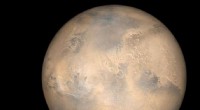
* Planets: Mercury, Venus, Earth, Mars, Jupiter, Saturn, Uranus, Neptune
* Dwarf Planets: Pluto, Ceres, Eris, Makemake, Haumea
The Importance of the Definition:
The distinction between planets and dwarf planets might seem subtle, but it's important for understanding the evolution of our solar system and the diversity of celestial bodies. It reflects the dynamic processes that shaped our planetary neighborhood over billions of years.
Fun Fact:
Pluto was reclassified as a dwarf planet in 2006 because it shares its orbital space with other icy bodies in the Kuiper Belt. This decision sparked debate but ultimately led to a better understanding of the nature of planetary bodies in our solar system.