1. Eliminates Atmospheric Distortion:
* Earth's atmosphere acts like a blurry lens, scattering and absorbing light, making ground-based telescopes see fuzzy images.
* Hubble, above the atmosphere, captures crisp, clear images of celestial objects.
2. Accesses All Wavelengths of Light:
* The atmosphere blocks certain wavelengths of light, especially ultraviolet and infrared.
* Hubble can observe in these wavelengths, providing a more complete picture of the universe.
3. Avoids Light Pollution:
* City lights and other sources of artificial light interfere with ground-based observations.
* Hubble is unaffected by light pollution, allowing it to observe faint objects.
4. Provides Continuous Observation:
* Ground-based telescopes are limited by weather and day-night cycles.
* Hubble orbits continuously, providing uninterrupted observations.
5. Enables Long-Exposure Photography:
* Earth's rotation causes blurring in long-exposure images taken from the ground.
* Hubble's stable orbit allows for extremely long exposures, capturing faint details.
6. Allows for Servicing and Upgrades:
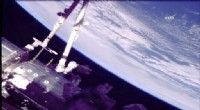
* Hubble has been visited by astronauts multiple times for repairs, upgrades, and instrument replacements.
* This has extended its lifespan and enhanced its capabilities significantly.
In Summary:
The Hubble Space Telescope's location outside Earth's atmosphere gives it unparalleled advantages for astronomical observation: sharper images, wider wavelength range, uninterrupted viewing, and the ability to be serviced and upgraded. This has revolutionized our understanding of the universe.