Atmosphere:
* Giant Red Spot: This iconic storm has been raging for centuries. It's larger than Earth and has been observed to shrink and change shape.
* Turbulent Bands: The atmosphere is characterized by swirling bands of clouds in different colors (white, red, brown, yellow) due to variations in composition and temperature.
* Lightning: Jupiter has lightning storms, some even more powerful than those on Earth.
* Auroras: Jupiter has auroras, similar to Earth's, but much larger and brighter. These are caused by charged particles from the sun interacting with the planet's magnetic field.
* Wind Speeds: Jupiter's winds are the fastest in the solar system, reaching over 400 mph.
Structure:
* No Solid Surface: Jupiter is a gas giant, meaning it has no solid surface. It's mostly hydrogen and helium, with a smaller amount of heavier elements.
* Core: Scientists believe Jupiter has a dense, rocky core, possibly the size of Earth.
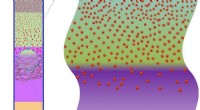
* Pressure and Temperature: The pressure and temperature increase dramatically as you go deeper into Jupiter's atmosphere, reaching incredibly high levels.
Moons:
* Io: The most volcanically active body in the solar system. Volcanoes spew sulfur and other materials, creating vast plains of lava.
* Europa: A very smooth, icy moon with a possible subsurface ocean.
* Ganymede: The largest moon in the solar system, even bigger than the planet Mercury. It has its own magnetic field and a thin atmosphere.
* Callisto: A heavily cratered moon with an ancient surface, suggesting it's been geologically inactive for a long time.
Other Notable Features:
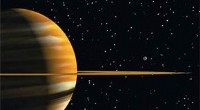
* Rings: Jupiter has a faint ring system, unlike the prominent ones of Saturn.
* Magnetic Field: Jupiter has a very strong magnetic field, the largest in the solar system.
* Internal Heat: Jupiter generates its own heat through a process called "Kelvin-Helmholtz contraction."
Spacecraft that have visited Jupiter:
* Pioneer 10 and 11 (1973 and 1974): First spacecraft to fly past Jupiter.
* Voyager 1 and 2 (1979): Took detailed images of the planet, its moons, and its rings.
* Ulysses (1992-2009): Studied Jupiter's magnetic field.
* Galileo (1995-2003): Orbited Jupiter for eight years, sending back a wealth of data.
* Cassini (2000-2017): Used Jupiter's gravity to slingshot itself towards Saturn, providing new insights about the planet.
* Juno (2016-present): Currently orbiting Jupiter, studying its gravitational field and interior.
Future Missions:
* Europa Clipper (2024): NASA mission to study Europa in detail, searching for signs of life.
* JUICE (2031): ESA mission to study Jupiter's moons, focusing on Europa, Ganymede, and Callisto.
These missions have transformed our understanding of Jupiter, revealing a dynamic, complex world full of surprises. There's still much to learn about this giant planet, and future missions promise even more exciting discoveries.