Here's a breakdown:
* Nebulae are vast, interstellar clouds of gas and dust. They are often brightly colored due to the presence of various elements, like hydrogen, helium, and oxygen.
* Star formation begins within these nebulae. Gravity pulls the gas and dust particles together, forming dense clumps.
* As these clumps become denser, their internal pressure and temperature increase.
* Eventually, the core reaches a critical temperature and pressure where nuclear fusion ignites, and a star is born.
There are different types of nebulae, each playing a role in star formation:
* Diffuse nebulae: These are vast, low-density clouds. Some examples include the Orion Nebula, which is visible to the naked eye and is a prominent star-forming region.
* Dark nebulae: These are dense, opaque clouds that block light from behind them. They are often associated with star formation, as the dense gas and dust can collapse under gravity.
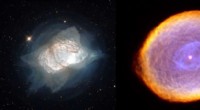
* Planetary nebulae: These are formed by the outer layers of dying stars. Although they look like planets, they are actually clouds of gas that are illuminated by the hot core of the star.
So, to answer your question directly, the glowing gas clouds that eventually become stars are nebulae, especially those that are dense and have the right conditions for gravitational collapse and nuclear fusion to occur.