Here's a breakdown of each:
Solar Flares:
* What they are: Sudden, intense bursts of energy from the sun's surface, lasting anywhere from a few minutes to a few hours.
* How they happen: The sun's magnetic field lines can become tangled and twisted, storing energy. When these lines suddenly reconnect, they release this stored energy in the form of radiation and particles.
* Effects: Solar flares can cause radio blackouts, disrupt satellite communications, and even damage power grids on Earth.
* Appearance: Appear as bright flashes of light on the sun's surface.
Coronal Mass Ejections (CMEs):
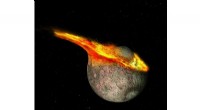
* What they are: Giant bubbles of super-heated gas and magnetic field lines that erupt from the sun's corona (outer atmosphere).
* How they happen: Similar to solar flares, CMEs are caused by the release of energy from tangled magnetic fields. However, they are much larger and more powerful than flares.
* Effects: CMEs can have a significant impact on Earth, causing geomagnetic storms that disrupt satellites, power grids, and communication systems. They can also produce beautiful auroras (northern and southern lights).
* Appearance: Can be observed as expanding clouds of plasma in the corona, sometimes accompanied by a solar flare.
Other Important Points:
* Sunspots: Darker areas on the sun's surface, cooler than the surrounding area. They are associated with intense magnetic activity and can be a precursor to flares and CMEs.
* Solar Cycle: The sun's activity, including the frequency of flares and CMEs, follows an approximately 11-year cycle. During periods of high activity (solar maximum), the sun produces more flares and CMEs than during periods of low activity (solar minimum).
Overall, while not storms in the traditional sense, solar flares and CMEs are powerful events that can have a significant impact on Earth and space weather. Understanding them is crucial for protecting our technology and ensuring the safety of astronauts.