1. No Atmospheric Distortion:
* Seeing: Earth's atmosphere constantly churns and shifts, causing light from distant objects to bend and scatter, creating a blurry image. This phenomenon, known as "seeing", limits the resolution of ground-based telescopes.
* Twinkling: The same atmospheric turbulence also causes stars to twinkle, further blurring images.
2. Access to All Wavelengths:
* Atmospheric Absorption: Earth's atmosphere absorbs certain wavelengths of light, like infrared and ultraviolet. Space telescopes can observe these wavelengths unimpeded, allowing for a more complete understanding of celestial objects.
3. Darker Skies:
* Light Pollution: Artificial light from cities and other sources pollutes the night sky, making it difficult to observe faint objects. Space telescopes are above this light pollution, offering pristine views of the cosmos.
4. Unobstructed View:
* Weather: Clouds, rain, and other weather phenomena can obscure ground-based observations. Space telescopes operate above these weather systems, providing uninterrupted views of the universe.
5. Improved Sensitivity:
* Thermal Radiation: Earth's atmosphere emits infrared radiation, which can interfere with sensitive observations. Space telescopes are shielded from this thermal noise, enabling them to detect faint objects.
Examples:
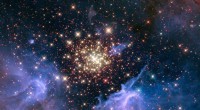
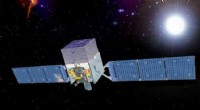
* Hubble Space Telescope: This iconic telescope has captured stunning images of galaxies, nebulae, and distant planets, thanks to its location above the atmosphere.
* James Webb Space Telescope: The largest and most powerful space telescope ever built, JWST operates in the infrared, allowing it to peer through dust clouds and observe the earliest galaxies.
In summary, space telescopes offer a clearer, more complete, and more sensitive view of the universe than ground-based telescopes. This makes them essential tools for astronomers seeking to unravel the mysteries of the cosmos.