Here's a breakdown of the components:
* Star: The central, luminous object that provides light and heat. Our Sun is a star.
* Planets: Large celestial bodies that orbit a star and do not emit their own light. They are typically made of rock, gas, or ice.
* Other Objects: This category includes a variety of objects:
* Moons: Natural satellites that orbit planets.
* Asteroids: Rocky bodies that orbit the star, primarily found in the asteroid belt between Mars and Jupiter.
* Comets: Icy bodies that orbit the star in highly elliptical paths.
* Dwarf Planets: Celestial bodies that are similar to planets but smaller and haven't cleared their orbital path.
Our Solar System:
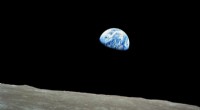
Our own solar system is an excellent example of a planetary system. It consists of the Sun, eight planets (Mercury, Venus, Earth, Mars, Jupiter, Saturn, Uranus, and Neptune), their moons, asteroids, comets, and dwarf planets.
Exoplanetary Systems:
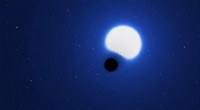
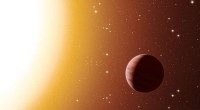
Scientists have discovered thousands of planetary systems beyond our own, called exoplanetary systems. These systems can be very different from our own, with planets orbiting stars of different sizes and types.
Formation of Planetary Systems:
Planetary systems are thought to form from a rotating disk of gas and dust called a protoplanetary disk that surrounds a young star. As the disk cools, material clumps together to form planets and other objects.