1. Launching Spacecraft:
* Telescopes: Rockets launch powerful telescopes like Hubble, Spitzer, and James Webb into space, allowing them to observe celestial objects without the interference of Earth's atmosphere. This provides incredibly detailed images and data about distant stars, galaxies, and planets.
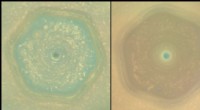
* Space Probes: Rockets send probes to planets, moons, asteroids, and comets to gather data about their composition, atmosphere, geology, and more. These missions have provided invaluable information about the solar system and beyond.
* Satellites: Rockets launch satellites that monitor Earth's weather, atmosphere, climate, and provide communication and navigation services. These satellites also collect data about the Sun and other celestial objects.
2. Enabling Scientific Experiments:
* Microgravity Research: Rockets allow scientists to conduct experiments in microgravity conditions, which cannot be replicated on Earth. This helps understand the effects of gravity on physical processes and develop new technologies.
* Cosmic Ray Studies: Rockets carry instruments to study cosmic rays, which are high-energy particles that bombard Earth from space. This research helps us understand the origin and nature of these rays.
* Atmospheric Studies: Rockets can reach high altitudes and collect atmospheric data, providing insights into atmospheric composition, temperature, and other properties.
3. Expanding Our Understanding:
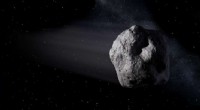
* Discovering New Objects: Rockets have helped discover new planets, moons, asteroids, and other celestial objects.
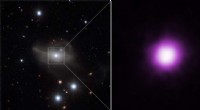
* Mapping the Universe: By observing distant galaxies and stars, rockets help create detailed maps of the universe, enabling us to understand its structure and evolution.
* Testing Theories: Rocket missions provide data that allows scientists to test and refine theories about the universe, such as the Big Bang theory.
In summary, rockets are essential for:
* Reaching space: To place telescopes, probes, and satellites in orbit.
* Performing scientific experiments: In microgravity and other conditions that cannot be replicated on Earth.
* Collecting data: About the universe, the solar system, and Earth itself.
* Expanding our understanding: Of the universe and its origins.
Rockets are the key to unlocking the secrets of the universe and continuing our journey of exploration and discovery.