Astronomical research and space exploration go hand in hand, fueling each other with discoveries and new avenues for investigation. Here's a breakdown of the process:
1. Observation and Data Collection:
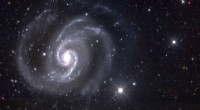
* Ground-based telescopes: Telescopes on Earth are used to observe celestial objects across the electromagnetic spectrum (from visible light to radio waves).
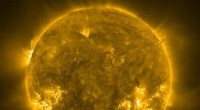
* Space telescopes: Telescopes in space, like Hubble, James Webb, and Chandra, provide a clearer view of the universe, unaffected by Earth's atmosphere.
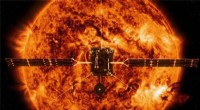
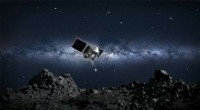
* Space probes: Robots sent to planets, moons, asteroids, and comets collect data on their composition, atmosphere, and other properties.
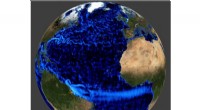
* Satellites: Satellites orbiting Earth collect data on Earth's atmosphere, weather patterns, and other environmental factors.
2. Data Analysis and Interpretation:
* Scientists analyze the collected data to uncover patterns, identify objects, and understand the universe's processes.
* Sophisticated software and algorithms are used to process vast amounts of data.
* Mathematical modeling is used to simulate and understand astronomical phenomena.
* Collaboration and communication are crucial for sharing data and insights among researchers worldwide.
3. Scientific Theories and Hypothesis Development:
* Observations and data analysis lead to the development of hypotheses about the universe and its workings.
* These hypotheses are tested through further observation and experimentation.
* Successful theories become accepted models of the universe and drive future research.
4. Missions and Technology Development:
* Astronomical research inspires the development of new technologies for space exploration, like telescopes, spacecraft, and instruments.
* Space missions are planned and conducted to further explore the universe and test theories.
* New technologies developed for space exploration can have applications in everyday life, like GPS, weather forecasting, and medical imaging.
5. Communication and Dissemination of Results:
* Research results are published in scientific journals and presented at conferences.
* Public outreach initiatives help share discoveries and inspire future generations.
* Media coverage plays a crucial role in raising awareness about astronomical research and space exploration.
The Cycle Continues:
This cycle of observation, analysis, theory development, mission planning, and communication continues, driving progress in our understanding of the universe. Every new discovery opens new avenues for research and exploration, making astronomy and space exploration a constantly evolving and exciting field.
Some Key Organizations Involved:
* NASA (United States)
* ESA (European Space Agency)
* JAXA (Japan Aerospace Exploration Agency)
* Roscosmos (Russia)
* CNSA (China National Space Administration)
In conclusion, astronomical research and space exploration are interconnected endeavors that advance our knowledge of the universe, push technological boundaries, and inspire wonder and curiosity.