Optical Telescopes:
* Refracting telescopes: Use lenses to focus light.
* Reflecting telescopes: Use mirrors to focus light.
* Space telescopes: Orbit above Earth's atmosphere, providing clearer views. Examples include Hubble Space Telescope and James Webb Space Telescope.
Radio Telescopes:
* Detect radio waves emitted by celestial objects.
* Often work together in arrays to improve resolution.
X-ray Telescopes:
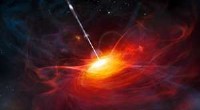
* Detect high-energy X-rays from objects like black holes and neutron stars.
* Must be placed in space because Earth's atmosphere absorbs X-rays.
Gamma-Ray Telescopes:
* Detect even higher-energy gamma rays than X-rays.
* Also must be in space.
Other Instruments:
* Spectrometers: Analyze the light from celestial objects to determine their composition, temperature, and speed.
* Photometers: Measure the brightness of celestial objects.
* Interferometers: Combine light from multiple telescopes to achieve higher resolution.
Ultimately, the instrument used depends on the specific type of celestial object and the scientific questions being investigated.