1. The Life Cycle of a Massive Star:
* Formation: Stars are born from massive clouds of gas and dust. The immense gravity pulls this material together, causing it to heat up and ignite nuclear fusion.
* Main Sequence: The star spends most of its life in a stable state, fusing hydrogen into helium in its core. This fusion process generates the outward pressure that balances the inward pull of gravity.
* Red Giant Phase: As the star's hydrogen fuel runs out, it begins fusing helium into heavier elements like carbon and oxygen. This process causes the star to swell significantly, becoming a red giant.
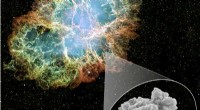
* Supernova Explosion: When the star's core is primarily composed of iron, fusion can no longer sustain it. Gravity overwhelms the core, causing it to collapse in on itself. This rapid collapse triggers a massive explosion called a supernova.
2. The Birth of a Black Hole:
* Stellar Remnant: The supernova explosion leaves behind a dense, compact core. The fate of this core depends on its mass.
* Critical Mass: If the core's mass is greater than about 3 times the mass of our Sun (the Chandrasekhar limit), the gravity becomes so intense that even light cannot escape.
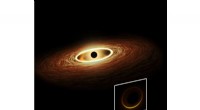
* Black Hole Formation: The core collapses further, squeezing all its mass into an incredibly small point called a singularity. Around this singularity forms a region of spacetime known as the event horizon, marking the point of no return.
3. Understanding Black Holes:
* Gravity Well: Black holes are incredibly dense objects with immense gravity, creating a deep "gravity well" from which nothing, not even light, can escape.
* Event Horizon: The event horizon is the boundary around the singularity. Once something crosses the event horizon, it is trapped forever, and no information can escape.
* Time Dilation: Due to the intense gravity, time slows down near a black hole, relative to observers far away.
Key Points:
* Only stars with masses much greater than our Sun can become black holes.
* The process involves a supernova explosion, leaving behind a dense core.
* Black holes are incredibly dense objects with immense gravity, trapping even light.
* They represent the final stage in the evolution of certain massive stars.
Let me know if you have any more questions about black holes or stellar evolution!