1. Spectroscopy:
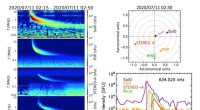
* Light analysis: The Sun emits a vast spectrum of light, which scientists analyze using spectrometers.
* Spectral lines: Each element absorbs and emits light at specific wavelengths, creating unique spectral lines. By examining the Sun's spectrum, scientists can identify the elements present and their relative abundance.
2. Solar Wind:
* Particles from the Sun: The Sun constantly emits a stream of charged particles called the solar wind.
* Elemental analysis: By studying the composition of the solar wind, scientists can directly measure the elements present in the Sun's outer layers.
3. Helioseismology:
* Sun's internal vibrations: Scientists can study the Sun's internal structure by analyzing the waves of sound that travel through it.
* Sound waves and composition: The speed of these sound waves is affected by the density and composition of the Sun's interior, providing information about its internal structure and composition.
4. Theoretical Models:
* Computer simulations: Scientists use complex computer models to simulate the Sun's internal processes, including its nuclear fusion reactions.
* Composition prediction: These models predict the elements that should be present in the Sun based on its age, size, and energy output.
Composition of the Sun:
Based on these methods, scientists have determined that the Sun is primarily composed of:
* Hydrogen (H): Approximately 70.6%
* Helium (He): Approximately 27.4%
* Other elements: Less than 2% (including oxygen, carbon, neon, iron, and others)
These methods have provided a detailed understanding of the Sun's composition, which is crucial for comprehending its energy production, evolution, and influence on the solar system.