Celestial Bodies:
* Stars: Massive balls of hot gas that produce light and heat through nuclear fusion. They come in different sizes, colors, and ages.
* Moons: Natural satellites that orbit planets. Some moons have atmospheres and even signs of past or present water, like our own Moon.
* Asteroids: Rocky, irregularly shaped objects that orbit the Sun, mostly found in the asteroid belt between Mars and Jupiter.
* Comets: Icy bodies that release gas and dust as they approach the Sun, creating a bright tail.
* Dwarf Planets: Objects that orbit the Sun but haven't cleared their orbital paths of other objects (like Pluto).
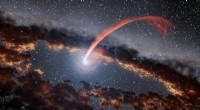
* Black Holes: Regions of spacetime where gravity is so strong that nothing, not even light, can escape.
Other Stuff:
* Nebulae: Giant clouds of gas and dust, often where stars are born. They can have stunning colors and shapes.
* Galaxies: Massive collections of stars, gas, dust, and dark matter. Our own galaxy is the Milky Way.
* Dark Matter: A mysterious substance that makes up a large part of the universe's mass, but doesn't interact with light.
* Cosmic Rays: High-energy particles that travel through space at nearly the speed of light.
* Cosmic Microwave Background Radiation: A faint glow of radiation left over from the Big Bang, the event that created the universe.
And even more:
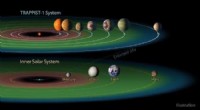
* Exoplanets: Planets orbiting stars outside our solar system.
* Supernova Remnants: The expanding clouds of gas and dust from a star's explosion.
* Quasars: Extremely bright objects powered by supermassive black holes at the centers of galaxies.
Space is constantly being explored and studied, and we're still discovering new things about it all the time!