1. Initial Mass:
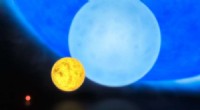
* Low-mass stars (less than 0.8 solar masses): These stars have long, stable lives. They spend most of their time in the main sequence, fusing hydrogen into helium in their core. They eventually become red giants, then planetary nebulae, and finally white dwarfs.
* Intermediate-mass stars (0.8 - 8 solar masses): These stars live shorter lives than low-mass stars. They go through similar stages as low-mass stars, but they eventually become red giants and then supernovae. The remnants of these stars can be neutron stars or black holes.
* High-mass stars (over 8 solar masses): These stars have very short lives and burn through their fuel quickly. They can evolve through multiple stages of fusion, leading to even heavier elements being created. They ultimately explode as supernovae, leaving behind neutron stars or black holes.
2. Chemical Composition:
* The initial chemical composition of a star, particularly its abundance of elements heavier than hydrogen and helium, can influence its evolution slightly. However, mass is the dominant factor.
3. Stellar Rotation:
* Stellar rotation can affect the rate of mass loss and the evolution of a star's magnetic field, which can influence the details of its later stages.
Key Life Stages:
* Main Sequence: The longest stage of a star's life where hydrogen fusion occurs in the core.
* Red Giant: As hydrogen fuel depletes, the core contracts and heats up, causing the outer layers to expand and cool, turning the star into a red giant.
* Horizontal Branch: For some stars, the helium core begins to fuse, creating a new source of energy and shifting the star to the horizontal branch.
* Asymptotic Giant Branch (AGB): As helium fuel depletes, the star expands further and becomes an AGB star.
* Planetary Nebula: In the final stages of low-mass stars, the outer layers are ejected, forming a planetary nebula around the dying core.
* White Dwarf: The dense, hot remnant of a low-mass star.
* Supernova: The explosive death of a massive star, leaving behind a neutron star or a black hole.
* Neutron Star: A very dense, rapidly rotating star composed mainly of neutrons.
* Black Hole: A region of spacetime where gravity is so strong that nothing, not even light, can escape.
Simplified Analogy:
Think of a star like a candle. The initial mass of the candle (its size) determines how long it will burn and how bright it will be. A smaller candle will last longer and produce less light than a larger one. The process of burning the candle (fusion in a star) is the same, but the initial mass dictates the duration and intensity of the process.