Here's a breakdown:
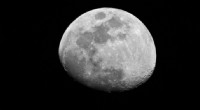
* Illumination: Both Earth's moon and Ganymede don't produce their own light; they reflect sunlight.
* Orbit: Both bodies orbit their planets, and the angle at which the sun shines on them changes throughout their orbits. This changing angle is what causes the phases.
* Phase Cycle: Just like our moon, Ganymede goes through a cycle of phases, including:
* New: When Ganymede is between the sun and Jupiter, we can't see it because the sunlit side faces away from us.
* Waxing Crescent: A thin sliver of Ganymede becomes visible.
* First Quarter: Half of Ganymede is illuminated.
* Waxing Gibbous: More than half of Ganymede is illuminated.
* Full: The entire sunlit side of Ganymede faces us.
* Waning Gibbous: Less than half of Ganymede is illuminated.
* Last Quarter: Half of Ganymede is illuminated, but the other side from the first quarter.
* Waning Crescent: A thin sliver of Ganymede is visible.
While the exact timing of the phases might differ due to Ganymede's longer orbital period around Jupiter, the fundamental principle of how the phases occur is the same.