Here's a breakdown of what astrobiologists study:
1. Origins of Life:
* Abiogenesis: How did life arise from non-living matter? Astrobiologists study the chemical and physical processes that could have led to the first self-replicating molecules and eventually, the first cells.
* Early Life: They investigate the earliest forms of life on Earth and how they evolved, focusing on environments like hydrothermal vents and ancient rock formations.
2. Evolution of Life:
* Extremophiles: Astrobiologists study organisms that thrive in extreme environments like hot springs, acidic lakes, or deep underground, as they provide insights into life's adaptability and potential for life beyond Earth.
* Biosignatures: They search for signs of past or present life on other planets and moons by studying potential biosignatures (chemical, geological, or biological traces of life) in samples from space or through remote sensing data.
3. Distribution of Life:
* Habitability: Astrobiologists assess the habitability of other planets and moons, considering factors like water, temperature, atmosphere, and radiation levels.
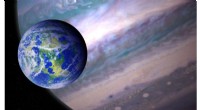
* Exoplanets: They research planets outside our solar system, searching for potentially habitable worlds and studying their atmospheric composition for signs of life.
* Astrobiology Missions: They contribute to missions like the Mars rovers and the upcoming Europa Clipper, which are designed to search for evidence of past or present life on other celestial bodies.
4. Interdisciplinary Nature:
Astrobiology is a highly interdisciplinary field, drawing from various scientific disciplines such as:
* Biology: Understanding the nature and evolution of life.
* Chemistry: Exploring the chemistry of life and its origins.
* Geology: Studying the geology of planets and moons, including their potential for harboring life.
* Physics: Understanding the laws of physics and their role in the universe.
* Astronomy: Observing and characterizing planets and moons in our solar system and beyond.
Ultimately, astrobiologists strive to answer the fundamental question: Are we alone in the universe? Their research has the potential to revolutionize our understanding of life and our place in the cosmos.