Here's why:
* Statistical likelihood: Given the sheer number of stars in the universe, it would be statistically improbable if our solar system was unique.
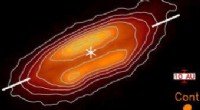
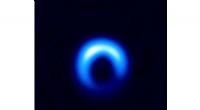
* Direct observations: While initially difficult, we now have methods to directly image some exoplanets. These images provide irrefutable evidence of their existence.
* Indirect detection methods: The majority of exoplanets have been discovered indirectly through methods like:
* Transit method: Observing dips in a star's brightness as a planet passes in front of it.
* Radial velocity method: Detecting the "wobble" in a star's motion caused by a planet's gravitational pull.
* Microlensing: Observing the bending of light from a distant star as a planet passes between it and Earth.
The search for exoplanets is one of the most exciting areas of astronomy today:
* Understanding planet formation: Exoplanets come in a wide range of sizes, orbits, and compositions, challenging our understanding of how planetary systems form.
* Searching for life: The ultimate goal of many exoplanet researchers is to find planets that could potentially support life, either now or in the past.
So, the answer is that astronomers are not only confident about the existence of exoplanets, they are actively searching for them and making remarkable discoveries every day!