However, we can talk about the different regions of the Sun and how they appear:
* Core: This is the hottest and densest region, where nuclear fusion takes place. While we can't "see" it directly, the core is responsible for the Sun's energy output.
* Radiative Zone: Energy from the core travels outwards through this zone, taking millions of years to reach the surface. It's incredibly dense and opaque, so we can't see it directly.
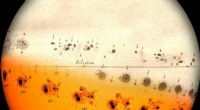
* Convective Zone: This is where the Sun's energy is transported by convection, with hot plasma rising and cooler plasma sinking. This zone is visible as granulation patterns on the Sun's surface.
* Photosphere: This is the visible surface of the Sun, where sunlight is emitted. It appears yellow-white in color.
* Chromosphere: This is a thin layer above the photosphere, only visible during eclipses or with special instruments. It appears reddish-orange due to hydrogen emission.
* Corona: This is the outermost layer of the Sun's atmosphere, extending millions of kilometers into space. It appears as a faint, white halo around the Sun during eclipses.
While the core, radiative zone, and convective zone don't have colors we can directly see, they are responsible for the energy that creates the colors we do see in the photosphere, chromosphere, and corona.