Here's a breakdown of the process:
1. Solar Wind: The Sun constantly emits a stream of charged particles, primarily protons and electrons, known as the solar wind.
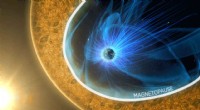
2. Magnetosphere: The Earth's magnetic field acts as a shield, deflecting most of the solar wind. However, some particles get trapped in the magnetosphere, a region around the Earth where the magnetic field dominates.
3. Entry Points: The electrons primarily enter the magnetosphere at the polar cusps, which are funnel-shaped regions located near the Earth's magnetic poles. These cusps act like "weak spots" in the magnetic field.
4. Auroral Oval: As the electrons spiral along the Earth's magnetic field lines, they are guided towards the poles. They eventually collide with atoms and molecules in the upper atmosphere, causing them to become excited. When these excited atoms and molecules return to their ground state, they release photons of light, creating the beautiful auroral displays.
In summary, the electrons that form auroras come from the solar wind, enter the magnetosphere through the polar cusps, and interact with the atmosphere to produce the colorful lights.