1. The Nebula:
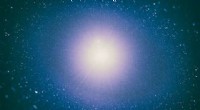
- A giant cloud of gas and dust, primarily hydrogen and helium, exists in space.
- This cloud, called a nebula, is cold and vast, stretching for light-years.
2. Gravitational Collapse:
- A slight disturbance, like a shockwave from a nearby supernova, triggers the cloud's collapse.
- Gravity pulls the gas and dust particles together, causing the cloud to spin faster.
3. The Protosun:
- As the cloud spins faster, it flattens into a disk shape.
- The center of the disk becomes increasingly dense and hot.
- This hot, dense core eventually ignites, forming the Sun.
4. Formation of Planetesimals:
- In the spinning disk, tiny particles of dust and ice collide and stick together, forming larger clumps called planetesimals.
- These planetesimals continue to grow through further collisions and gravitational attraction.
5. Formation of Planets:
- Planetesimals eventually grow large enough to become planets.
- The inner planets (Mercury, Venus, Earth, Mars) are primarily rocky due to the intense heat of the early Sun, which vaporized lighter elements.
- The outer planets (Jupiter, Saturn, Uranus, Neptune) are gas giants, formed from the accumulation of ice and gas in the colder outer regions of the solar system.
6. Clearing the Disk:
- Over time, the Sun's intense solar wind pushes away any remaining gas and dust, leaving behind the planets we see today.
Important Note: The nebular hypothesis is a widely accepted theory, but it's continually refined by new observations and scientific advancements. There are still some unanswered questions about specific details of the formation process.