Here's a breakdown:
Telescopes:
* Strengths:
* Observe distant objects in great detail.
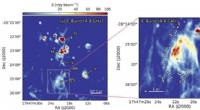
* Can observe a wide range of wavelengths, including visible light, infrared, ultraviolet, X-rays, and radio waves.
* Can be placed on Earth or in space, offering different advantages.
* Relatively inexpensive compared to space probes.
* Weaknesses:
* Can only observe from a distance, limiting their ability to study objects closely.
* Limited by Earth's atmosphere, which can distort or block certain wavelengths of light.
* Can't physically interact with celestial objects.
Space Probes:
* Strengths:
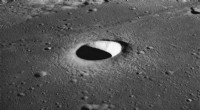
* Can travel close to or even land on celestial bodies.
* Can gather detailed information about a target's composition, atmosphere, and magnetic field.
* Can conduct in-situ experiments, like taking soil samples or measuring atmospheric pressure.
* Can provide high-resolution images and data from locations inaccessible to telescopes.
* Weaknesses:
* Expensive to develop and launch.
* Limited lifespan due to fuel and power constraints.
* Can only study a limited number of targets.
* May require specialized instruments for specific observations.
In essence:
* Telescopes are like binoculars – they allow us to see far-off objects in great detail.
* Space probes are like explorers – they venture close to objects, gather data, and bring it back to us.
Therefore, choosing between a telescope and a space probe depends on the scientific goal:
* To study distant objects in detail: Telescope
* To explore a specific object close-up: Space probe
Both instruments are crucial for our understanding of the universe and have contributed significantly to scientific discoveries. They complement each other and are often used in tandem to gain a more complete picture of the cosmos.