* Composition: Stars, including the sun, are primarily made up of hydrogen and helium. The exact proportions can vary slightly depending on the star's age and size.
* Nuclear Fusion: Stars generate energy through nuclear fusion in their core. This process combines hydrogen atoms to form helium, releasing immense amounts of energy.
* Gravity and Pressure: Gravity pulls all the gas in a star inwards, while the outward pressure from nuclear fusion balances this force, creating a stable equilibrium.
* Life Cycle: Stars follow a life cycle that depends on their initial mass. They are born from clouds of gas and dust, evolve over billions of years, and eventually die, leaving behind remnants like white dwarfs, neutron stars, or black holes.
However, the sun is also unique in some ways:
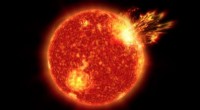
* Location: The sun is our closest star and the only star in our solar system.
* Size and Temperature: The sun is a medium-sized star, with a temperature of about 5,500 degrees Celsius (9,932 degrees Fahrenheit) on its surface. Other stars can be much larger or smaller, hotter or cooler.
* Age: The sun is about 4.6 billion years old, a middle-aged star in the grand scheme of stellar evolution.
So, the sun is both similar to and different from other stars. It is a member of a vast family of celestial objects, but its unique characteristics make it special to us.