Here's a breakdown:
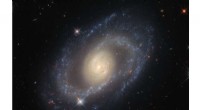
* Before Hubble: Astronomers believed that the Milky Way was the entirety of the universe. While some suspected other "spiral nebulae" might be distant galaxies, they lacked the observational evidence to confirm it.
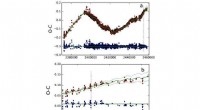
* Hubble's breakthrough: Using the powerful 100-inch Hooker telescope at Mount Wilson Observatory, Hubble observed Cepheid variable stars in the Andromeda Galaxy. These stars have a predictable relationship between their brightness and pulsation period, allowing Hubble to calculate their distance. This distance was far greater than the size of the Milky Way, proving Andromeda was a separate galaxy.
* The "Island Universes" concept: This discovery shattered the prevailing view and led to the understanding that our universe is filled with countless galaxies like our own, forming a vast "island universe" concept.
Therefore, Edwin Hubble is considered the key figure in establishing the existence of galaxies beyond the Milky Way, revolutionizing our understanding of the universe.