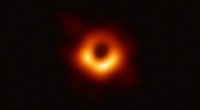
Here's why:
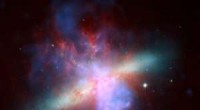
* Supernova Explosion: When a massive star (at least 8 times the mass of our sun) runs out of fuel, its core collapses under its own gravity. This collapse triggers a massive explosion, called a supernova, that blasts the star's outer layers into space.
* Neutron Star Formation: The remaining core, incredibly dense and hot, is composed mostly of neutrons, hence the name. Gravity compresses these neutrons incredibly tightly, making the star incredibly dense.
* Immense Density: A teaspoon of neutron star matter would weigh millions of tons! That's because the atoms are squeezed so close together that the space between them is almost nonexistent.
Other Interesting Facts about Neutron Stars:
* Rapid Rotation: Neutron stars often spin incredibly fast, some completing hundreds of rotations per second. This rapid spinning can produce powerful magnetic fields, leading to the emission of radio waves, X-rays, and even gamma rays.
* Pulsars: Some rapidly rotating neutron stars with strong magnetic fields emit beams of radiation that sweep across space like a lighthouse beam. These are called pulsars, and they were the first neutron stars discovered.
* Black Holes: If the core of a collapsing star is massive enough (more than 3 times the mass of our sun), even the incredible density of a neutron star isn't enough to resist gravity's pull, and it will collapse further into a black hole.