Composition:
* Mostly Hydrogen and Helium: Jupiter's atmosphere is primarily composed of hydrogen (H2) and helium (He), similar to the Sun.
* Trace Gases: While hydrogen and helium dominate, there are trace amounts of other elements like methane (CH4), ammonia (NH3), water (H2O), and hydrocarbons. These trace gases play a crucial role in the formation of Jupiter's colorful bands and storms.
Structure:
* Layered Atmosphere: Jupiter's atmosphere is divided into several layers:
* Troposphere: The lowest layer, where weather occurs. It's characterized by strong winds, cloud formations, and the famous Great Red Spot.
* Stratosphere: Above the troposphere, with warmer temperatures due to the absorption of solar radiation by methane.
* Thermosphere: The upper layer, where temperatures increase with altitude, but it's very thin and contains very little gas.
* Exosphere: The outermost layer, gradually transitioning into space.
Features:
* Cloud Bands and Zones: Jupiter's atmosphere is characterized by alternating bands of dark-colored belts and lighter-colored zones. These bands are created by differences in temperature, pressure, and composition, leading to different cloud formations.
* The Great Red Spot: This iconic storm has raged for centuries and is a massive anticyclone, larger than Earth. Its reddish color is thought to be due to complex chemical reactions involving sulfur and phosphorus compounds.
* Other Storms: Jupiter experiences other storms, including smaller "white ovals" and "brown ovals."
* Auroras: Like Earth, Jupiter has auroras, but on a much grander scale. These spectacular displays are caused by charged particles from the Sun interacting with Jupiter's magnetic field.
Dynamic Weather:
* Jet Streams: Powerful jet streams flow eastward and westward in Jupiter's atmosphere, driving the cloud bands and storms.
* Lightning: Jupiter experiences lightning, but it's much more powerful than on Earth.
* Heat Flux: Jupiter emits more heat than it receives from the Sun, indicating an internal heat source, likely from gravitational contraction.
Exploring Jupiter's Atmosphere:
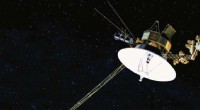
* Spacecraft Missions: Spacecraft like Voyager 1 and 2, Galileo, Juno, and the upcoming JUICE mission have provided invaluable insights into Jupiter's atmosphere, revealing its complex dynamics and composition.
Jupiter's atmosphere is a fascinating and complex system that continues to captivate scientists and astronomers with its incredible beauty and dynamic processes.