Propulsion Systems:
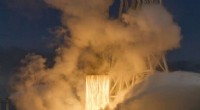
* Chemical Rockets: The most common type, these engines burn fuel and oxidizer to create hot gas that is expelled out of a nozzle, generating thrust. This is how most rockets launch from Earth and how spacecraft maneuver in space.
* Electric Propulsion: These engines use electricity to accelerate charged particles (ions) to create thrust. They are more efficient than chemical rockets, but generate less thrust. This makes them suitable for long-duration missions.
* Solar Sails: These large, reflective sails use the pressure of sunlight to push the spacecraft forward. This method is very efficient and can be used for long distances, but it requires sunlight.
* Nuclear Propulsion: Using nuclear energy to create thrust, this type of propulsion offers higher efficiency and longer mission durations. However, there are concerns about safety and environmental impact.
Gravitational Forces:
* Gravity Assist (Swing-by): By passing close to a planet or moon, spacecraft can "steal" some of its orbital energy, increasing their own speed and changing direction. This is a key technique for interplanetary missions.
* Orbital Mechanics: Spacecraft can be placed in specific orbits around celestial bodies using the forces of gravity. This allows them to stay in a desired location or track a target.
How Spacecraft Navigate:
* Navigation Systems: Spacecraft use sophisticated navigation systems, like GPS, to determine their position and velocity.
* Star Tracking: Some spacecraft use cameras to take pictures of stars and use the star patterns to determine their orientation.
* Inertial Measurement Units (IMUs): These devices measure acceleration and rotation, helping spacecraft to navigate.
Summary:
Spacecraft move in space using a combination of propulsion systems to generate thrust and gravitational forces to maneuver. This complex interplay of technology and physics allows us to explore the vastness of space.