Volcanoes on Other Planets and Moons:
* Io (Jupiter's moon): Io is the most volcanically active body in our solar system! It has hundreds of volcanoes spewing out sulfur and silicate lava, some reaching hundreds of kilometers high.
* Triton (Neptune's moon): Triton has cryovolcanoes, which erupt with icy materials like nitrogen, ammonia, and methane. These eruptions create geysers that reach up to 8 kilometers high.
* Venus: Venus has active volcanoes, although their activity is much less frequent than Io's.
* Mars: Mars has extinct volcanoes, some of which are the largest in the solar system (e.g., Olympus Mons). It is believed that Mars had active volcanoes in its past.
Other Volcanic Phenomena in Space:
* Supernovae: These are massive stellar explosions that release enormous amounts of energy and material into space, creating a "volcanic" eruption on a cosmic scale.
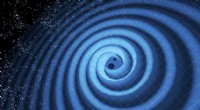
* Gamma-ray bursts: These are the most powerful explosions in the universe, and some are thought to be caused by the collapse of a star into a black hole, creating a "volcanic" eruption of energy and particles.
* Active Galactic Nuclei (AGN): These are extremely bright centers of galaxies powered by supermassive black holes, often exhibiting "volcanic" activity in the form of jets of high-energy particles ejected from the black hole.
So, while we don't have volcanoes as we know them in space, we do have incredibly fascinating volcanic phenomena occurring on other planets, moons, and within galaxies. It's a testament to the incredible diversity and power of the universe!