Here's the breakdown:
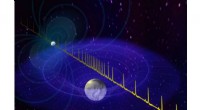
* Solar wind: This stream of charged particles, primarily protons and electrons, is constantly flowing outward from the Sun.
* Earth's magnetosphere: This is a region of space surrounding Earth, dominated by Earth's magnetic field. This field acts as a shield, deflecting most of the solar wind.
* Upper atmosphere: This is the outermost layer of Earth's atmosphere, where the density of air is extremely low.
* Collisions: When charged particles from the solar wind enter Earth's atmosphere near the poles, they collide with atoms and molecules in the upper atmosphere.
* Excitation: These collisions excite the atoms and molecules, causing them to jump to higher energy levels.
* Emission of light: When the excited atoms and molecules return to their ground state, they release energy in the form of light, creating the auroras.
The specific colors of the aurora depend on the types of atoms and molecules that are excited. For example, green auroras are produced by oxygen atoms, while red auroras are produced by nitrogen molecules.