Ground-based Telescopes:
* Optical Telescopes: These telescopes use lenses and mirrors to collect visible light from planets. Examples include the Very Large Telescope (VLT) and the Keck Observatory.
* Radio Telescopes: These telescopes detect radio waves emitted by planets. Examples include the Atacama Large Millimeter/submillimeter Array (ALMA) and the Very Long Baseline Array (VLBA).
* Infrared Telescopes: These telescopes are sensitive to infrared radiation, allowing them to see through dust clouds and observe the heat signatures of planets. Examples include the James Webb Space Telescope and the Spitzer Space Telescope.
Space Telescopes:
* Hubble Space Telescope (HST): One of the most iconic space telescopes, HST captures images in visible and ultraviolet light, offering detailed views of planets and their atmospheres.
* James Webb Space Telescope (JWST): This infrared telescope, launched in 2021, has the capability to see through dust clouds and observe the earliest stages of planet formation.
* Kepler Space Telescope: This telescope, retired in 2018, was specifically designed to discover exoplanets by monitoring the brightness of stars and detecting dips in light caused by transiting planets.
* Transiting Exoplanet Survey Satellite (TESS): This ongoing mission is searching for exoplanets using the transit method, covering a wider area of the sky than Kepler.
Other Technologies:
* Adaptive Optics: This technology compensates for atmospheric distortion, producing sharper images of planets from ground-based telescopes.
* Interferometry: Combining light from multiple telescopes to achieve higher resolution, enabling detailed observations of planetary surfaces.
* Spectroscopy: Analyzing the light from planets to determine their composition, temperature, and atmospheric properties.
* Doppler Spectroscopy (Radial Velocity Method): Measuring the tiny wobble in a star's motion caused by the gravitational pull of an orbiting planet.
* Astrometry: Precisely measuring the position of a star over time to detect the gravitational influence of a planet.
Beyond Observing:
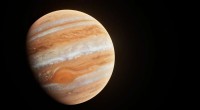
* Spacecraft Missions: Sending probes like Voyager, Cassini, and Juno to planets allows for close-up studies of their atmospheres, surfaces, and magnetic fields.
* Simulations: Computer models are used to study planetary formation, evolution, and the dynamics of planetary systems.
These technologies work together to provide a comprehensive understanding of planets, both within our solar system and beyond. Each technology offers a unique perspective, allowing scientists to piece together the puzzle of these fascinating celestial objects.