Here's how it worked:
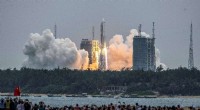
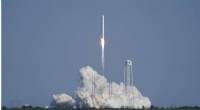
1. Launch: The Mercury capsule was launched atop a powerful rocket.
2. Orbit: The capsule entered orbit around Earth.
3. Re-entry: When it was time to return, the capsule's retrorockets fired, slowing it down and causing it to begin its descent.
4. Splashdown: As the capsule entered the atmosphere, it used a heat shield to protect the astronaut from the intense heat of re-entry. The capsule landed in the ocean, where recovery teams were waiting.
So, instead of a controlled landing on land, the Mercury missions ended with a controlled splashdown in the ocean. This method was chosen for several reasons:
* Safety: It was considered safer than attempting a land landing, especially with the limited technology available at the time.
* Recovery: The vast ocean offered a larger target area for recovery teams, making it easier to locate and retrieve the capsule and the astronaut.
* Testing: Splashdown provided a way to test the capsule's re-entry and landing capabilities.
The Mercury missions were a crucial step in the development of human spaceflight, paving the way for the more complex missions that followed.