1. Earth's Orbit:
* Revolution: The Earth revolves around the Sun in an elliptical orbit, meaning it's not a perfect circle. This takes approximately 365.25 days, which is why we have a year.
* Rotation: The Earth also rotates on its axis, completing a full rotation about every 24 hours, resulting in day and night.
2. Moon's Orbit:
* Revolution: The Moon revolves around the Earth, taking about 27.3 days to complete one orbit. This is called a sidereal month.
* Rotation: The Moon rotates on its axis at the same rate as it revolves around the Earth. This is why we always see the same side of the Moon.
3. Together Around the Sun:
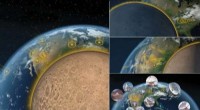
* The Earth-Moon system: The Earth and Moon actually orbit the Sun together, like a pair of dancers twirling around a central point. The Moon's orbit isn't perfectly centered on the Earth, so it actually wobbles a bit as it goes around the Sun.
Key Points:
* Tilt: The Earth's axis is tilted at approximately 23.5 degrees, which causes the seasons.
* Phases of the Moon: We see different phases of the Moon because the amount of sunlight reflected towards us changes as the Moon orbits the Earth.
* Eclipses: Sometimes, the Moon's shadow falls on the Earth (solar eclipse), or the Earth's shadow falls on the Moon (lunar eclipse). These happen when the Sun, Earth, and Moon are perfectly aligned.
Visualizing:
Imagine a spinning top (Earth) with a smaller top (Moon) orbiting around it. Now, imagine this whole system spinning around a larger, central object (the Sun). This analogy helps visualize how the Earth and Moon move together through space.