* Stars form in different regions of the galaxy at different times. Stars form from collapsing clouds of gas and dust. These clouds can be dispersed or triggered to collapse by various events, leading to different star formation epochs.
* Planets form around stars. Planets form from the leftover material after a star is born. This means that planets are always younger than the stars they orbit.
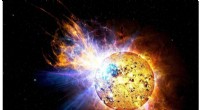
* Star formation is an ongoing process. Even today, new stars are forming in various regions of the galaxy.
Here are some examples:
* The Sun: Our Sun is about 4.6 billion years old.
* Earth: Earth is also about 4.5 billion years old, slightly younger than the Sun because it formed from the leftover material after the Sun was born.
* Proxima Centauri: The closest star to our Sun is a red dwarf star estimated to be about 4.85 billion years old.
* NGC 2024 (The Flame Nebula): This nebula is a stellar nursery where new stars are forming right now. The stars forming within it are much younger than our Sun.
In summary: The age of stars and planets varies greatly. Some stars are billions of years old, while others are just beginning their lives. Planets always form after their stars, so they are always younger.