* Blackbody Radiation: Stars emit light across a wide range of wavelengths, similar to a perfect blackbody. The peak wavelength of this radiation is determined by the star's temperature.
* Wien's Law: This law states that the peak wavelength of radiation emitted by a blackbody is inversely proportional to its temperature.
* Hotter stars: Have shorter peak wavelengths, which appear bluer.
* Cooler stars: Have longer peak wavelengths, which appear redder.
Color Spectrum and Temperature:
* Blue stars: The hottest, with temperatures over 25,000 Kelvin.
* White stars: Very hot, around 10,000 Kelvin.
* Yellow stars: Like our Sun, with temperatures around 5,500 Kelvin.
* Orange stars: Cooler, around 4,000 Kelvin.
* Red stars: The coolest, with temperatures below 3,500 Kelvin.
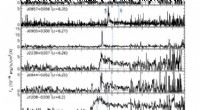
Remember: A star's color is a simplified indicator of its temperature. The actual spectrum of light emitted by a star is more complex and can reveal detailed information about its composition and other properties.