Here's a breakdown of the theory:
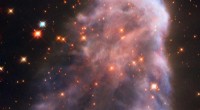
* The Nebula: The solar system began as a giant, rotating cloud of gas and dust called a nebula. This nebula was primarily composed of hydrogen and helium, with small amounts of heavier elements.
* Gravitational Collapse: The nebula started to collapse under its own gravity. As it collapsed, the material within the nebula began to spin faster, like an ice skater pulling their arms in.
* Formation of the Protosun: The majority of the material in the nebula eventually collapsed into a hot, dense core called the protosun. This core eventually became our Sun.
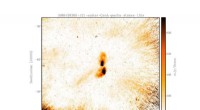
* Disk Formation: The remaining material in the nebula flattened into a disk, rotating around the protosun. This disk is called the protoplanetary disk.
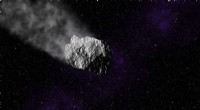
* Planetesimal Formation: Within the protoplanetary disk, dust particles began to clump together due to electrostatic forces. These clumps grew larger, eventually forming planetesimals, small rocky bodies.
* Planetary Accretion: Planetesimals continued to collide and merge, eventually forming the planets we see today. The inner planets (Mercury, Venus, Earth, and Mars) are rocky because they formed closer to the protosun where the heat vaporized lighter elements like hydrogen and helium. The outer planets (Jupiter, Saturn, Uranus, and Neptune) formed farther from the protosun and accreted more gas and ice, making them gas giants.
The Solar Nebula Theory is the most widely accepted explanation for the formation of our solar system. It's supported by observations of other star-forming regions and the composition of the planets and other objects in our solar system.