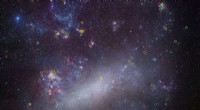
* Galaxies are already quite large: Galaxies are massive collections of stars, gas, dust, and dark matter. They are the largest gravitationally bound systems in the universe.
* Larger structures exist: While galaxies are large, there are even larger structures called clusters of galaxies and superclusters of galaxies. These are groups of galaxies bound together by gravity.
* The universe is vast: The universe doesn't have a strict hierarchical structure beyond this point. While there are areas of high galaxy density, there are also vast voids where galaxies are relatively sparse.
So, to answer your question more directly, the "next" step after a galaxy could be:
* A galaxy group: A small collection of galaxies held together by gravity.
* A galaxy cluster: A large collection of galaxies, often containing hundreds or thousands of members.
* A supercluster: An enormous collection of galaxy clusters, spanning hundreds of millions of light-years.
Ultimately, there's no absolute endpoint to this "sequence." The universe is constantly expanding and evolving, and these structures are always interacting and changing.